
Senior Research Engineer
Team lead for Documentation, Instrumentation and Radiation Protection in the Radioactive Waste Management department. Also working on disposal of radioactive waste and inventory reports.
About me
Engineering profile, work experience, education, and selected professional activities.
I work at the intersection of radioactive waste management, radiation protection, instrumentation, and structured technical documentation.
Profile
My work combines regulated engineering practice with clear technical documentation, instrumentation oversight, radiation protection coordination, and reporting quality in radioactive waste management environments.
The common thread is operational reliability: making complex work traceable, measurable, and easier to review across teams, tools, and long-running processes.
Career Timeline
Team lead for Documentation, Instrumentation and Radiation Protection in the Radioactive Waste Management department. Also working on disposal of radioactive waste and inventory reports.
Team lead for Documentation, Instrumentation and Radiation Protection. Also worked on digitalization of process documentation, adding reporting functions and tools.
Database development and migration (MS SQL Server / MS Access), writing waste-acceptance criteria for interim storage, cost and price calculations, and company website responsibility.
Project lead for instrumentation setup on site (including safety assessment), gamma spectrometry, clearance measurements, characterization of radioactive waste (IGS, SGS, TGS), calibration, and reporting.
Developed and implemented a Java analysis tool to show gamma activity distribution inside a waste drum for clearance homogeneity assessment.
IT trainer for Windows and Internet, HTML, and web publishing courses in German and English.
Selected Work
Led instrumentation setup projects on site, including writing safety assessment documentation.
Contributed to disposal-related activities and radioactive waste inventory reporting.
Drove digitalization of process documentation and added reporting functions and tools.
Developed and migrated databases using MS SQL Server and MS Access.
Wrote waste-acceptance criteria for interim storage.
Performed waste management cost and price calculations using top-down and bottom-up approaches.
Performed waste management cost and price calculations using top-down and bottom-up approaches.
Supported clearance measurements for decommissioning of the ASTRA research reactor (completed 2006).
Supported clearance measurements for decommissioning of the ASTRA research reactor (completed 2006).
Developed a Java analysis tool for gamma activity distribution in waste drums for clearance homogeneity assessment.
Education
Graduated from the University of Vienna with a Magister rerum naturalium (Mag. rer. nat.) in Physics in 2004. The degree program focused on advanced topics in material physics and computational methods. The diploma thesis, conducted at the Institute of Materials Physics, explored atomic twin structure models and ab-initio calculations of twin boundary energies in martensitic NiTi alloys. In September 2004, the final diploma examination was completed with distinction. In February 2005, academic excellence was further recognized with the award of a Merit Scholarship under the Austrian Student Support Act (Studienförderungsgesetz 2004) from the University of Vienna.
Activities Archive
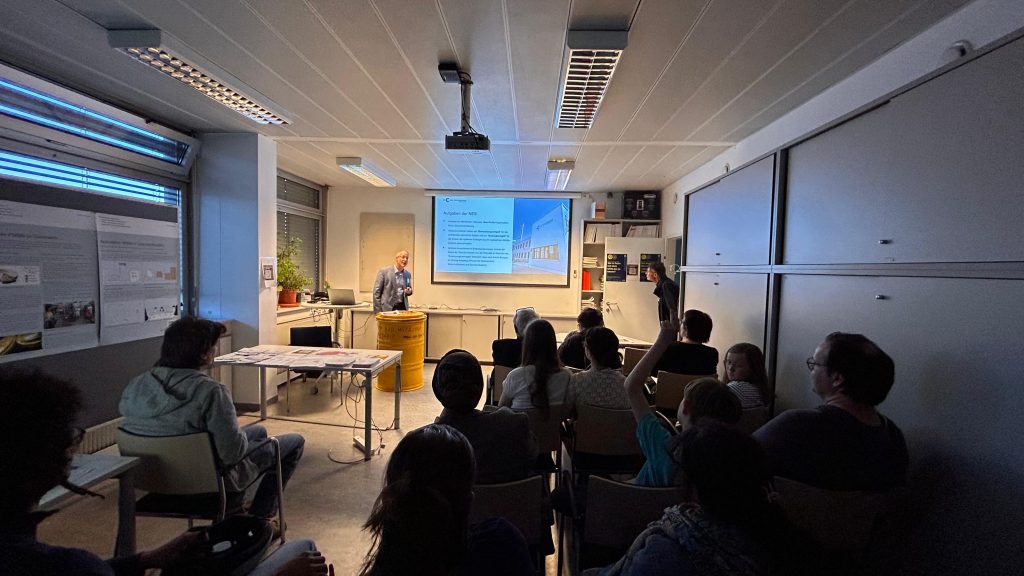
I was happy to once again attend — together with a colleague — the Long Night of Research in Vienna on 24 April 2026 at the invitation of the Radiation Protection Department of the Ministry of Environment (BMLUK). We alternated in presenting radioactive waste management in Austria and were available before, after, and between presentations […]
I was happy to once again attend — together with a colleague — the Long Night of Research in Vienna on 24 April 2026 at the invitation of the Radiation Protection Department of the Ministry of Environment (BMLUK).
We alternated in presenting radioactive waste management in Austria and were available before, after, and between presentations to answer the many questions that arose during the evening.
Thank you to everyone who visited our station, showed interest in the topic, and asked thoughtful questions. Special thanks as well to our hosts for having us.Seeing the curiosity and engagement of so many visitors made the long evening absolutely worthwhile!
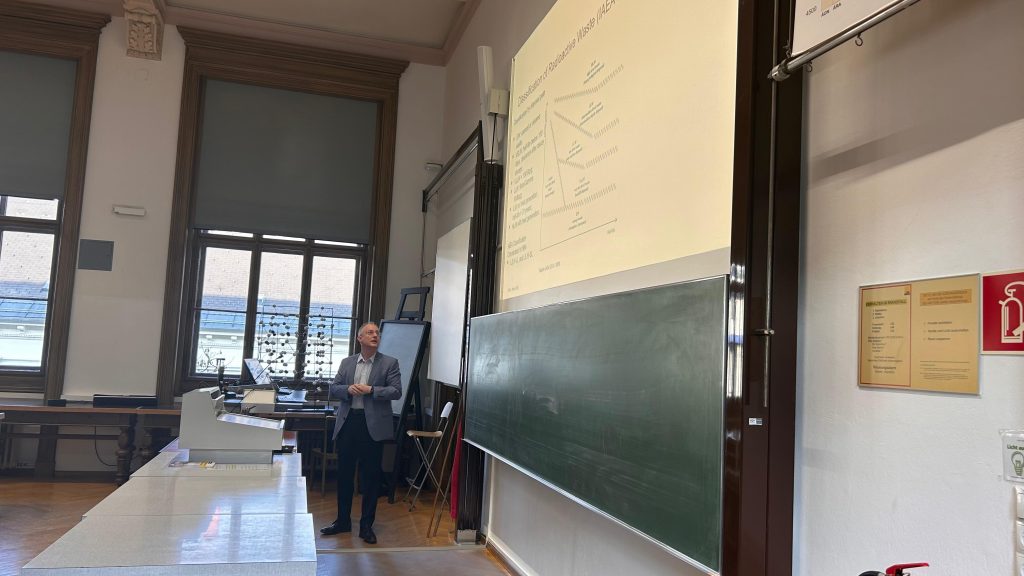
A colleague and I were invited by the Österreichische Mineralogische Gesellschaft (ÖMG) to present “Management and Disposal Options for Austrian Radioactive Waste” in March – first at the University of Vienna, then at the University of Graz, and finally at the Montanuniversität Leoben – to students and researchers from the field of geosciences. It was great to […]
A colleague and I were invited by the Österreichische Mineralogische Gesellschaft (ÖMG) to present “Management and Disposal Options for Austrian Radioactive Waste” in March – first at the University of Vienna, then at the University of Graz, and finally at the Montanuniversität Leoben – to students and researchers from the field of geosciences.
It was great to see so much interest in a topic where interdisciplinary exchange is so important, and which is not only a technological challenge but also a societal one, in which radiation protection, environmental protection and intergenerational responsibility are equally important.
Special thanks to our kind hosts for having us!
At the International Conference on Radioactive Waste Management: Solutions for a Sustainable Future hosted by the IAEA (1–5 November 2021), we presented a poster entitled “Reconditioning of Historic Waste in Austria.” Abstract To comply with regulations and ensure state-of-the-art treatment of historically conditioned radioactive waste in Austria, as well as to guarantee safe interim storage until 2045, historic […]
At the International Conference on Radioactive Waste Management: Solutions for a Sustainable Future hosted by the IAEA (1–5 November 2021), we presented a poster entitled “Reconditioning of Historic Waste in Austria.”
To comply with regulations and ensure state-of-the-art treatment of historically conditioned radioactive waste in Austria, as well as to guarantee safe interim storage until 2045, historic conditioned radioactive waste is being reconditioned as part of an ongoing project.
Waste drums representing all three main conditioning types found in Austria — super-compacted pellets, homogeneously cemented drums, and inhomogeneously cemented drums — have already been successfully reconditioned.
The project has provided valuable experience with all three waste forms. Particularly important steps included the pre-sorting of waste types based on existing documentation, the use of specialized modular machinery to dismantle drums layer by layer in order to minimize cross-contamination, and the radiological and chemical characterization performed both during and after processing.
As a final step, documentation of the original drums is consolidated with data obtained from the reconditioning process and from radiological and chemical analyses.
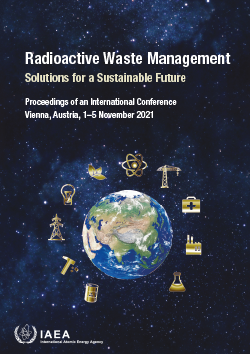
The full conference proceedings can be downloaded here:
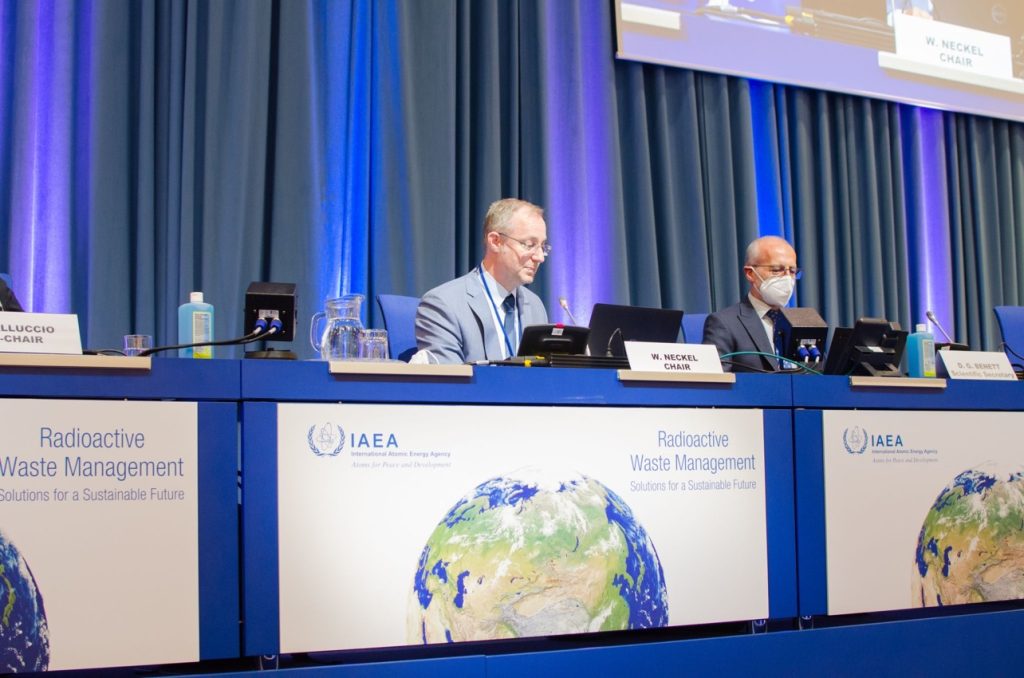
At the International Conference on Radioactive Waste Management: Solutions for a Sustainable Future hosted by the IAEA (1–5 November 2021), I was honored to be invited as a speaker for the opening session. My presentation focused on “Integrated Waste Stream Management in a Small Inventory Country.” As quoted in the conference proceedings: Austria is typical of many small […]
At the International Conference on Radioactive Waste Management: Solutions for a Sustainable Future hosted by the IAEA (1–5 November 2021), I was honored to be invited as a speaker for the opening session. My presentation focused on “Integrated Waste Stream Management in a Small Inventory Country.”
As quoted in the conference proceedings:
Austria is typical of many small waste inventory nations: it has no nuclear power plants, a single research reactor, and comparatively small amounts of radioactive waste arising from industrial, research, and medical nuclear applications. Mr. Neckel of Austria’s waste management organization, Nuclear Engineering Seibersdorf (NES), described the arrangements for radioactive waste management in Austria.
The proceedings further highlighted NES’s responsibilities in radioactive waste collection, characterization, conditioning, interim storage, and the ongoing re-conditioning of legacy waste drums using modern technologies. They also described Austria’s ongoing efforts toward the development of a final repository solution for radioactive waste.
The full conference proceedings can be downloaded here:
IAEA Conference Proceedings – Radioactive Waste Management
Later during the conference, I also had the opportunity to chair the session on Integrated Waste Management.
It was an exciting experience to be involved in such a large international conference and to hear so many different perspectives and presentations from experts all over the world.
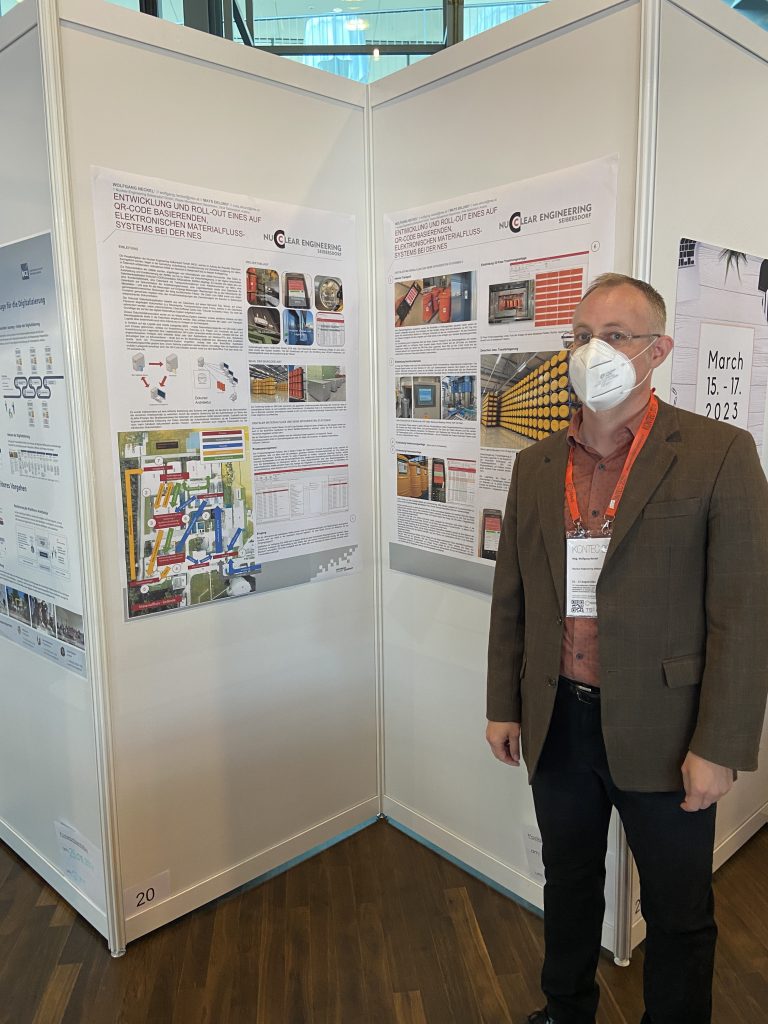
At KONTEC 2021, the international symposium and trade fair on the conditioning of radioactive operational and decommissioning waste and the decommissioning of nuclear facilities, held in Dresden from 25 to 27 August 2021, I had the opportunity to present a poster entitled “Development and Roll-Out of a QR Code-Based Electronic Material Flow System at NES.” The poster introduced […]
At KONTEC 2021, the international symposium and trade fair on the conditioning of radioactive operational and decommissioning waste and the decommissioning of nuclear facilities, held in Dresden from 25 to 27 August 2021, I had the opportunity to present a poster entitled “Development and Roll-Out of a QR Code-Based Electronic Material Flow System at NES.”
The poster introduced a project I led in 2019/2020, which focused on the development and implementation of an electronic material flow system based on QR codes. The project aimed to improve transparency, traceability, and efficiency in the handling and documentation of material flows at Nuclear Engineering Seibersdorf.It was a valuable opportunity to share practical experience from the project and to discuss digitalization in radioactive waste management with experts from the field.
Contact
Interested in collaboration, technical exchange, or project discussion in radioactive waste management and radiation protection.